
Effects of Intraovarian Injection of Autologous Platelet Rich Plasma on Ovarian Rejuvenation in Poor Responders and Women with Premature Ovarian Insufficiency
Abstract:
Injection of intraovarian platelet-rich plasma (PRP) was recently presented in terms of improvement ovarian function in women with a poor ovarian response (POR) or premature ovarian insufficiency (POI).
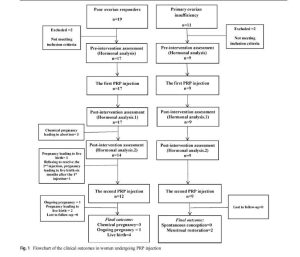
In a before and after study, 17 poor responder women and 9 women with the diagnosis of POI were recruited. The multifocal intramedullary infusion of 1.5 ml activated PRP was performed into each ovary. The majority of women in both groups received the second PRP injection with the twofold increase in the dosage to 3ml, three months after the first injection. Evaluation of serum anti mullerian hormone (AMH), follicle-stimulating hormone (FSH), luteinizing hormone (LH), and Estradiol (E2), was performed. In PORs hormonal assessment was done on day 3 of the menstrual cycle.
In addition, all women were followed with regard to pregnancy outcome up to delivery. In the POI group, menstrual restoration was monitored. The significant difference was not detected regarding the hormonal profile between the three time points in both groups. With regard to pregnancy outcome, 8/17 (47%) of
PORs had spontaneous pregnancy in response to PRP injection. Of those, three women (37.55%) had abortions, whereas 4 pregnancies (50%) led to healthy live births and one woman (12.5%) was in the 24th week of her pregnancy. Menstruation recovery occurred among 22.2% of women with POI after the second PRP injection, but no one became pregnant. Intraovarian injection of autologous PRP might be considered as an alternative treatment in poor responders. As for women with POI, it is questionable whether PRP could induce menstrual recovery.
Effects of Intraovarian Injection of Autologous Platelet-Rich Plasma