

Preparation and Evaluation of Pramipexol Extended-Release System to Improve the Pharmacokinetics of the Drug
Vahid Ramezani, Melika Namazi
Introduction:
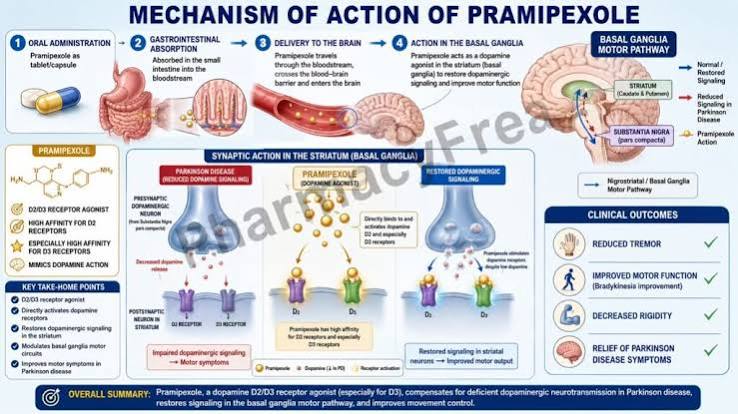
Parkinson’s disease is a progressive neurodegenerative disorder of the central nervous system whose prevalence increases with age and is associated with both motor and non-motor symptoms. Pramipexole, a selective D₂ and D₃ dopamine receptor agonist, is one of the commonly prescribed medications for different stages of Parkinson’s disease. The immediate-release formulation of this drug requires multiple daily administrations, which may complicate treatment management, particularly in elderly patients and those receiving multiple medications. In addition, it may lead to plasma concentration fluctuations, peak-related adverse effects, and reduced treatment adherence. Therefore, the development of a sustained-release formulation capable of gradual drug release over 24 hours represents a suitable therapeutic approach. The aim of this study was to prepare and evaluate a 0.75 mg sustained-release pramipexole tablet with a release profile comparable to Sifrol® ER, using readily available pharmaceutical excipients and a direct compression manufacturing method.
Materials and Methods:
In this experimental laboratory study, the λmax of pramipexole in phosphate buffer (pH 6.8) was first determined, and a calibration curve was plotted using UV–Vis spectrophotometry. Subsequently, an HPLC method adapted from a previously published assay method for pramipexole quantification was partially validated for dissolution testing within the concentration range used in this study. Validation parameters included specificity, linearity, limit of detection (LOD), limit of quantification (LOQ), intra-day precision, and accuracy, after which the reliable analytical range was established. Thereafter, 30 preliminary and optimized formulations were designed in five series using available pharmaceutical materials. The formulations differed in terms of the type of release-controlling polymer, filler type, percentage of release-controlling polymer(s), and amount of secondary glidant. Powder blend flow properties were evaluated, and tablets were prepared by direct compression. The physicomechanical characteristics of the tablets, including appearance, weight, dimensions, and hardness, were assessed. Dissolution testing was conducted over 24 hours in phosphate buffer (pH 6.8), and drug concentrations in the samples were measured using both UV–Vis spectrophotometry and the validated HPLC method. Similarity between the release profiles of the formulations and the reference product was assessed using the similarity factor (f₂). Drug release kinetics and mechanisms were determined by fitting the release data to various kinetic models. Finally, friability and swelling behavior of the selected formulations were evaluated and compared with the reference product.
Results:
The employed HPLC method successfully met the required validation criteria for quantifying drug concentrations in dissolution samples within the intended concentration range. Formulations E2 (containing 50% HPMC K30) and E5 (containing 45% HPMC K30 and 2.5% Carbomer 940) provided complete and controlled drug release over 24 hours and demonstrated high similarity to the reference product, with f₂ values of 91.01 and 86.20, respectively. The powder blends of these formulations showed “good” flowability based on the angle of repose and “fair to passable” flowability according to Carr’s Index and Hausner ratio. The resulting tablets exhibited acceptable hardness (13–15 kp) and friability below 1%. Their physicomechanical properties complied with pharmacopeial standards, and their swelling behavior was comparable to that of the reference product. The release profiles followed the Korsmeyer–Peppas kinetic model, with Super Case II transport identified as the dominant release mechanism. Based on the findings, the use of HPMC K30 as the primary polymer together with MCC PH 101 as the filler and a combination of 2% silicon dioxide, 2% talc, and 1% magnesium stearate resulted in an optimal formulation.
Conclusion:
In this study, two sustained-release matrix tablet formulations of pramipexole 0.75 mg were successfully developed. These formulations demonstrated high similarity to the reference product in terms of drug release profile, and their evaluated physicochemical characteristics were within pharmacopeial standards. Therefore, they may serve as suitable candidates for further pharmaceutical development within the country and provide a basis for future industrial-scale production studies.
Keywords: Parkinson’s disease; Pramipexole; Sustained-release tablet; Hydrophilic matrix system; Hydroxypropyl methylcellulose (HPMC).
https://en.ssu.ac.ir/storage/2026/07/Preparation-and-Evaluation-of-Pramipexol-Extended.pdf